Longevity and Cellular Compounds
A redox dye, a peptide targeted to mitochondria, and a coenzyme.
Longevity and Cellular Compounds in more detail
What sits on this shelf?
| Compound | Description | Sizes available |
|---|---|---|
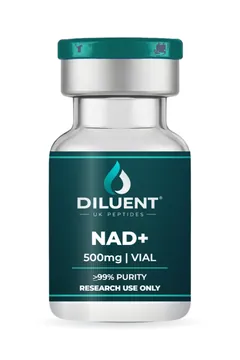
| NAD+ | Nicotinamide adenine dinucleotide, a coenzyme rather than a peptide | 500mg vial |
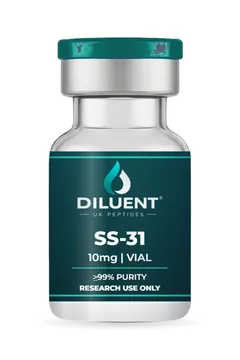
| SS-31 | Peptide targeted to mitochondria; elamipretide is another listed name | 10mg, 50mg vial |
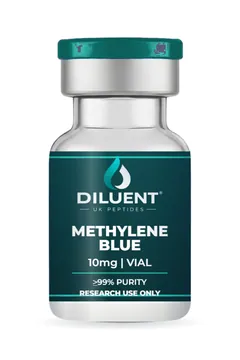
| Methylene Blue | Redox-cycling dye, synthetic | 10mg vial |
What is NAD+?
It contains no amino acids whatsoever: it is made of two joined nucleotides. No other vial in the range holds as much as this 500mg one, and none has a lower rate per milligram.
What storage does methylene blue need?
Somewhere dark, because it is highly sensitive to light.
Questions on Cellular & Longevity
Is NAD+ a peptide?
No. Nicotinamide adenine dinucleotide is a coenzyme built from two nucleotides, and it contains not a single peptide bond.
NAD+ and NMN: what is the difference?
NMN is a precursor found earlier on the same pathway, and so a different molecule; NAD+ is the coenzyme itself. This shelf carries NAD+ only.
What other names does SS-31 go by?
It has carried four names at different stages. In the lab it was SS-31, from the Szeto-Schiller peptide series; during development it was MTP-131; in the trials it was Bendavia; and its non-proprietary name is elamipretide. All four refer to the one tetrapeptide.