Peptides of the Growth Hormone Axis
Secretagogues acting at the ghrelin receptor and GHRH analogues acting at the GHRH receptor: two classes, two receptors.
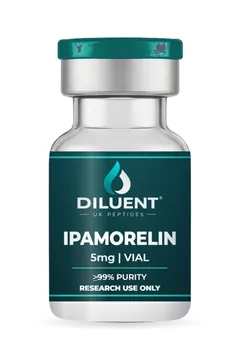
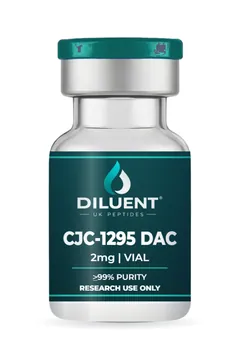
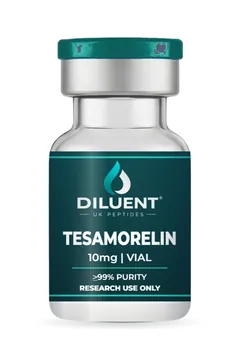
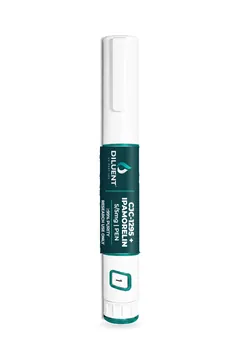
Peptides of the Growth Hormone Axis in more detail
Which products are on this shelf?
| Compound | Class | Receptor | Sizes available |
|---|---|---|---|
| Ipamorelin | Secretagogue | Ghrelin (GHSR-1a) | 5mg, 10mg vial · 10mg pen |
| CJC-1295 DAC | GHRH analogue | GHRH | 2mg vial |
| Tesamorelin | GHRH analogue | GHRH | 10mg vial |
| CJC-1295 + Ipamorelin | Both | Both | 5/5mg, 10/10mg vial · 5/5mg pen |
What does DAC stand for?
The letters stand for drug affinity complex: an attachment that binds albumin and, by doing so, keeps the molecule circulating much longer, while the peptide sequence beneath it stays unchanged. Without the DAC, the same peptide is known as mod GRF (1-29), and that is the CJC component of our blend.
Which studies have been published?
All three have their own literature. CJC-1295 DAC was the subject of a randomised, placebo-controlled, double-blind trial in healthy adults (PMID 16352683). Animal and in-vitro work first characterised the selectivity of ipamorelin (PMID 9849822). A meta-analysis pooled five randomised controlled trials of tesamorelin in HIV-associated lipodystrophy (PMID 41545261).
Questions on Growth Hormone Axis
In what way does a GHRH analogue differ from a secretagogue?
The receptor targeted. Ipamorelin acts at GHSR-1a, the ghrelin receptor; tesamorelin and CJC-1295 act at the GHRH receptor.
What is mod GRF (1-29), and how does it relate to CJC-1295?
Another name for CJC-1295 once the DAC is removed. In our CJC-1295 + Ipamorelin blend, it makes up the CJC component.